


Refined Reflection: The Artistry of the Mother of Pearl Mirror
- Nov 7, 2025
- 5 min read

A mirror is a functional necessity, but when framed in iridescent mother of pearl, it is transformed into a piece of luminous art. The mother of pearl mirror is defined by its meticulous craftsmanship, featuring thousands of hand-cut, polished shell fragments set into intricate patterns. It serves as an instant focal point, adding depth, light, and a layer of cool, exotic luxury to any wall. Its natural shimmer captures light, brightening the space and injecting a bespoke, high-end sensibility into the interior.
This comprehensive guide details the strategic integration of the mother of pearl mirror into a cohesive luxury home. We will explore how its reflective artistry is carefully contrasted and harmonized with a collection of matte, textured artisanal pieces: the central focus of the bone inlay coffee table, the foundational bedroom storage of the bone inlay dresser and bone inlay chest of drawers, and the solid structure of the bone inlay cabinet. This approach ensures the mirror is celebrated as a statement piece while integrating perfectly into an interior rich with global craftsmanship.
I. The Aesthetic and Strategic Placement of the Mother of Pearl Mirror
The mirror's reflective surface combined with the luminous frame creates a complex visual dynamic.
1. Unique Aesthetic Qualities
Luminous Texture: The shell fragments are inherently iridescent, creating a subtle, shifting shimmer that adds texture and dynamism to a flat wall. This natural reflectivity makes the mirror a powerful source of ambient light.
Artistic Pattern: The frames showcase complex geometric, floral, or arabesque designs. The pattern should be chosen to match the room's style—geometric for modern spaces, and ornate for transitional or eclectic settings.
Color Base: The pearl is typically inlaid into a dark resin (black or navy) for high contrast or a light resin (white or ivory) for an ethereal effect.
2. Placement and Function
The mother of pearl mirror should maximize its impact on light and space:
Focal Point: Hang the mirror in a prominent location—above a console, over a mantle, or above a chest of drawers.
Light Amplification: Position the mirror to reflect natural light sources (windows) or targeted artificial light (sconces or lamps) to fully exploit the shimmering quality of the pearl frame, making the room feel larger and brighter.
II. Mastering Textural Contrast: Bone Inlay Complements
The luxurious cool shimmer of the pearl must be strategically balanced by the warm, matte texture of multiple bone inlay pieces throughout the home. This contrast creates a layered, sophisticated aesthetic.
1. Central Contrast: The Bone Inlay Coffee Table
The bone inlay coffee table acts as the horizontal anchor of the living area and introduces the necessary textural counterpoint.
Luminous vs. Opaque: The reflective mother of pearl mirror on the wall is perfectly balanced by the low, matte, light-absorbing surface of the bone inlay coffee table. This contrast prevents the room from being visually overwhelming or flat.
Shared Design Language: Both pieces share the concept of intricate, hand-set inlay, reinforcing the home's artisan theme, but they use different materials to create visual excitement.
2. Bedroom Anchors: The Bone Inlay Dresser and Bone Inlay Chest of Drawers
In the bedroom, the mirror is coordinated with the primary storage units.
Grounding Mass: The bone inlay dresser (low and wide) and the bone inlay chest of drawers (tall and vertical) provide a solid, patterned, matte framework for the room. Their substantial visual weight grounds the space and ensures the delicate shimmer of the mirror remains an accent.
Placement Strategy: The mirror can be hung above the bone inlay chest of drawers or placed atop the bone inlay dresser as a vanity mirror. The intricate patterns of the bone pieces and the luminous pattern of the mirror frame form a cohesive wall unit.
Cohesion Detail: The metallic hardware (handles, pulls) on the bone inlay dresser and bone inlay chest of drawers must match the metallic trim on the mother of pearl mirror frame to create a subtle, unifying thread of consistent luxury.
3. Structural Stability: The Bone Inlay Cabinet
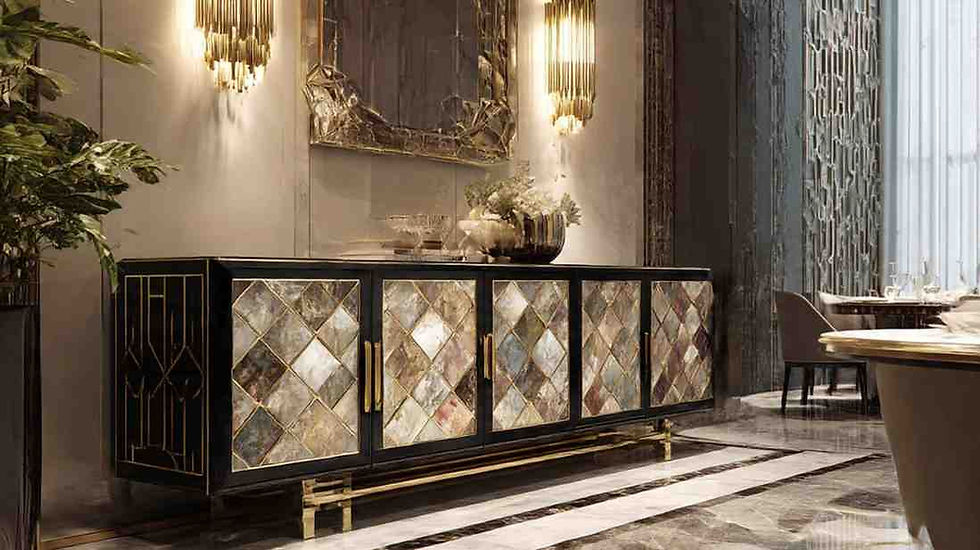
The bone inlay cabinet (e.g., a sideboard or credenza) reinforces the matte, grounding texture on a large structural piece, often in the dining or living area.
Form Balance: The solid, rectilinear form of the bone inlay cabinet offers a strong visual anchor that supports the vertical lightness of the mirror.
Pattern Unity: Ensure the pattern on the bone inlay cabinet complements or relates to the pattern on the mirror frame, confirming the consistency of the artisan style across zones.
III. Achieving Visual Harmony
The strategic use of mother of pearl mirror is to elevate the overall design, not compete with the functional furniture.
Restrained Accessories: When styling pieces near the mirror or bone inlay furniture, keep accessories minimal and simple (e.g., a single vase, a small stack of books) to allow the intricate inlay patterns to take center stage.
Light Strategy: Use lighting that is focused on the mirror to highlight the mother of pearl, while allowing the bone pieces to maintain their warm, matte tranquility.
Conclusion: A Bespoke Narrative of Light and Texture
The mother of pearl mirror is a focal point of bespoke artistry and luminous elegance. By strategically contrasting its cool, shimmering texture with the grounding, matte craftsmanship of the bone inlay coffee table, bone inlay dresser, bone inlay chest of drawers, and bone inlay cabinet, the home achieves a layered, consistent, and impeccably refined aesthetic. This sophisticated interplay of reflective and opaque materials creates an interior narrative rich in global design and luxurious detail.
Frequently Asked Questions (FAQ)
1. What is the key design advantage of pairing bone and mother of pearl?
A. The key advantage is textural contrast. The mother of pearl mirror is cool and reflective, which is perfectly balanced by the bone inlay furniture's warm, opaque, matte texture, preventing the room from feeling visually flat.
2. Should the mirror hang over the bone inlay dresser or the bone inlay chest of drawers?
A. It can be placed over either. If hung over the tall bone inlay chest of drawers, it emphasizes verticality. If placed on the bone inlay dresser as a vanity, it maximizes its practical function.
3. How does the bone inlay coffee table influence the mirror's placement?
A. The coffee table grounds the living area with its matte texture. The mother of pearl mirror should be placed where its reflection can effectively lift and brighten the space surrounding the heavy coffee table, establishing a visual flow between the floor and the wall.
4. How do I unify the mother of pearl mirror with the bone inlay cabinet?
A. Unify them through hardware consistency. Ensure the metallic trim on the mirror frame matches the handles or feet of the bone inlay cabinet. They are also linked by their shared theme of hand-set inlay craftsmanship.
5. Why is the mirror's frame pattern important?
A. The pattern (geometric or floral) dictates the overall style. If the mirror is geometric, the bone inlay dresser and other pieces should ideally feature a geometric pattern to ensure stylistic harmony.


Comments