


Refined Reflection: The Artistry of the Mother of Pearl Mirror
- Nov 4, 2025
- 5 min read

A mirror is a functional necessity, but when framed in iridescent mother of pearl, it is transformed into a piece of luminous art. The mother of pearl mirror is defined by its meticulous craftsmanship, featuring thousands of hand-cut, polished shell fragments set into intricate patterns. It serves as an instant focal point, adding depth, light, and a layer of cool, exotic luxury to any wall. Its natural shimmer captures light, brightening the space and injecting a bespoke, high-end sensibility into the interior.
This comprehensive guide details the strategic integration of the mother of pearl mirror into a cohesive luxury home. We will explore how its reflective artistry is balanced and coordinated with essential furnishings: the practical function of the modern bedroom side tables, the foundational storage provided by the chest of drawers, the textural contrast of a bone inlay mirror, and the solid mass of the 3 door buffet cabinet. This approach ensures the mirror is celebrated as a statement piece while harmonizing with the functional elements of the room.
I. The Aesthetic and Strategic Placement of the Mother of Pearl Mirror
The mirror's reflective surface combined with the luminous frame creates a complex visual dynamic.
1. Unique Aesthetic Qualities
Luminous Texture: The shell fragments are inherently iridescent, creating a subtle, shifting shimmer that adds texture and dynamism to a flat wall. This natural reflectivity makes the mirror a powerful source of ambient light.
Artistic Pattern: The frames showcase complex geometric, floral, or arabesque designs. The pattern should be chosen to match the room's style—geometric for modern spaces, and ornate for traditional or eclectic settings.
Color Base: The pearl is often set into a dark resin (black or navy) for high contrast or a light resin (white or ivory) for an ethereal effect.
2. Placement and Function
The mother of pearl mirror should maximize its impact on light and space:
Focal Point: Hang the mirror in a prominent location—above a console, over a mantle, or above the chest of drawers.
Light Amplification: Position the mirror to reflect natural light sources (windows) or targeted artificial light (sconces or lamps) to fully exploit the shimmering quality of the pearl frame, making the room feel larger and brighter.
II. Coordinating Reflection and Texture
The design dialogue relies on balancing the mirror's luminous quality with other foundational pieces.
1. The Functional Frame: Modern Bedroom Side Tables
The mother of pearl mirror is often used in the bedroom, where it must coordinate with the highly functional modern bedroom side tables.
Reflective Echo: Since the mirror provides overt shimmer, the modern bedroom side tables should include a subtle reflective echo. This could be a high-gloss lacquer finish, a mirrored drawer front, or simple, polished metallic hardware (brass or chrome).
Form Contrast: The elaborate pattern of the mirror's frame requires the side tables to maintain clean, geometric simplicity (cube or cylinder) to prevent pattern overload and keep the bedside area serene.
Height: The mirror, if used as a dressing mirror, should be appropriately scaled to the room, and the side tables should maintain their correct ergonomic height (level with the mattress).
2. Anchoring the Bedroom: The Chest of Drawers
When the mother of pearl mirror is placed above the chest of drawers, they form a unified decorative unit.
Pattern vs. Solidity: The chest of drawers should be visually solid and non-patterned (e.g., a simple wood veneer or plain lacquer). This solidity acts as a necessary anchor for the visually complex, lighter mirror above it.
Shared Hardware: The most effective connection is through the hardware. If the mirror has a brass frame border, the handles on the chest of drawers must be the same brass finish, creating a sophisticated material link.
Scale: The width of the mirror should be approximately two-thirds to three-quarters the width of the chest of drawers for optimal visual balance.
3. The Textural Dialogue: The Bone Inlay Mirror
If the home features multiple artisan pieces, the mother of pearl mirror must harmonize with the contrasting texture of a bone inlay mirror (often found in an entryway or hallway).
Cool vs. Warm: This is the key contrast. The mother of pearl mirror is cool, glossy, and iridescent. The bone inlay mirror is warm, matte, and opaque. Using both materials creates a rich, layered aesthetic—the mother of pearl adds lightness, and the bone adds grounding texture.
Form Consistency: If the pearl mirror is rectangular, the bone inlay mirror should ideally share the same general shape or a similar level of geometric complexity in its pattern, ensuring the two statement pieces share a formal language.
III. Integrating Perimeter Storage: The 3 Door Buffet Cabinet
The 3 door buffet cabinet is the large, horizontal, functional piece of storage that anchors the living or dining area.
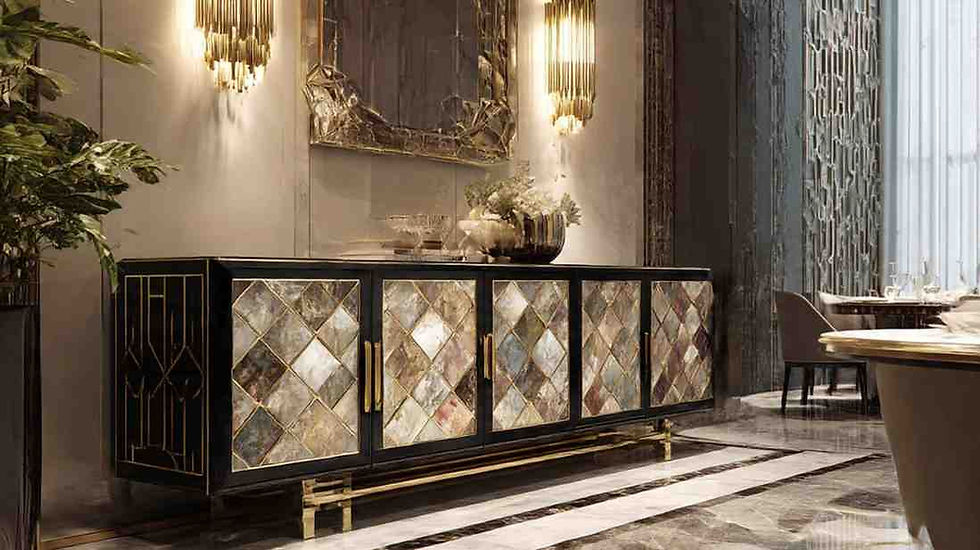
Balance of Form: The vertical, ornate mirror must be balanced by the low, horizontal mass of the 3 door buffet cabinet. The contrast between the mirror's delicacy and the cabinet's solidity adds to the design's sophistication.
Material Harmony: The 3 door buffet cabinet should be simple and solid (wood or lacquer) to avoid competing with the mirror's artistry.
The Unifying Finish: Ensure the metallic hardware on the 3 door buffet cabinet (pulls, feet) is matched to the metallic trim on the mother of pearl mirror frame. This subtle detail ensures the most functional piece in the room aligns with the most decorative one.
Conclusion: A Bespoke Narrative of Light
The selection of a mother of pearl mirror introduces a focal point of bespoke artistry and luminous elegance. By strategically mounting it over a solid chest of drawers, coordinating its shimmer with the simple forms of modern bedroom side tables, contrasting its texture with a bone inlay mirror, and unifying the entire scheme via the hardware on the 3 door buffet cabinet, the home achieves a layered, consistent, and impeccably refined narrative of light and luxury.
Frequently Asked Questions (FAQ)
1. Where is the best place to hang a mother of pearl mirror?
A. Above a piece of furniture that needs anchoring, such as a chest of drawers or a console table, in a location that maximizes the reflection of natural light.
2. How should the modern bedroom side tables coordinate with the mirror's elaborate frame?
A. The side tables should provide visual contrast through simplicity. They should have clean, geometric forms and a solid, non-patterned finish to ensure the bedside area remains serene and uncluttered, letting the mirror be the focal point.
3. What is the main difference between a mother of pearl mirror and a bone inlay mirror?
A. Mother of pearl mirrors are luminous, glossy, and cool, due to the shell's iridescence. Bone inlay mirrors are matte, opaque, and warm, due to the bone's texture. They are complementary artisan contrasts.
4. How do I achieve visual balance when placing the mirror above a chest of drawers?
A. The mirror's width should be approximately two-thirds to three-quarters the width of the chest of drawers to avoid looking too small or too wide for the piece below it.
5. How does the 3 door buffet cabinet tie into the mirror's design?
A. The 3 door buffet cabinet links to the mirror through hardware consistency. By ensuring the metallic pulls on the large cabinet match the metallic trim on the mirror's frame, you create a sophisticated, unifying material thread across the room.


Comments