


Maximizing Function and Flair: The Definitive Guide to Side Tables for Living Room Design
- Oct 24, 2025
- 5 min read

In high-end interior design, true luxury resides in the details and the seamless blend of aesthetics and utility. The side tables for the living room are the unsung heroes of this balance. They are not merely placeholders for a lamp; they are critical components that finalize a seating arrangement, anchor furniture visually, and provide indispensable convenience at arm's reach.
This comprehensive guide will detail how to select and perfectly place the right side tables for living room use, ensuring maximum ergonomic benefit and visual appeal. Crucially, we will then explore how these small accent pieces must harmonize with the large-scale storage solutions that maintain a clutter-free sanctuary, specifically the highly functional sideboard buffet cabinet and the various forms of the chest of drawers for sale, including the careful integration of the childrens chest of drawers in a family setting.
I. The Strategic Role of Side Tables for Living Room
Choosing the right side table is a precise exercise in proportion, shape, and material science. Get these fundamentals right, and the entire room will feel balanced and deliberate.
1. Mastering Height and Proximity
The success of side tables for living room placement is entirely dependent on its relationship to the seating:
The Ergonomic Rule: The tabletop surface should be no lower than the height of the seat cushion and, ideally, flush with or no more than two inches below the armrest of the sofa or chair. This placement guarantees comfortable, effortless access for drinks, remotes, and reading material.
Aesthetic Alignment: The table's depth should align with the depth of the sofa arm it flanks. An oversized table that projects beyond the arm can look clumsy and impede the flow of movement.
2. Form Follows Function: Choosing the Right Shape
The shape of your side table should complement the geometry of the room and the sofa:
Table Shape | Best Use Case | Design Impact |
Round Tables | Ideal for high-traffic or smaller living rooms, as they eliminate sharp corners, improving flow and safety. | Softens the often-rigid, angular lines of modern sofas, adding fluidity. |
Square/Rectangular Tables | Best suited for large, deep-seated sofas or sectionals with wide arms, where maximum surface area is needed. | Reinforces structured, formal layouts and complements boxy furniture silhouettes. |
Nesting Sets | Provides exceptional flexibility. Stacked, they save space; separated, they offer multiple surfaces for entertaining. | Adds dynamic height variation and material layering. |
3. Materiality and Texture
Use side tables for living room spaces as an opportunity to introduce visual interest and contrast. If your primary coffee table is wood, choose a side table in a contrasting material like marble or metal:
Stone (Marble/Travertine): Adds weight, permanence, and a cool, luxurious texture that brilliantly contrasts with soft upholstery.
Metal/Glass: Creates a sleek, modern, and visually light profile. Excellent for smaller rooms, as reflective surfaces prevent the space from feeling cluttered.
Inlay/Veneer Wood: Adds warmth and bespoke artisanal detail, often serving as a connecting element to other wood pieces in the room.
II. Strategic Storage: Integrating Large-Scale Furniture
While side tables for living room handle immediate needs, the room's serene atmosphere depends on superior storage. Here is how the key large pieces operate and connect.
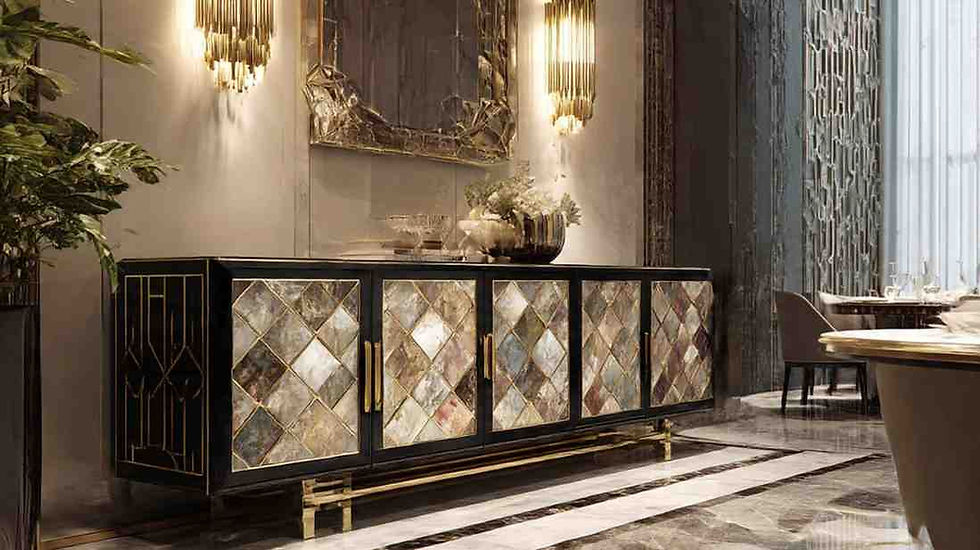
1. The Low-Profile Powerhouse: The Sideboard Buffet Cabinet
The sideboard buffet cabinet is the ultimate storage piece for a luxury living room. It's defined by its generous length and low, solid profile.
Primary Function: Concealed, large-volume storage. It is the perfect place to hide unsightly media components, cables, games, blankets, and excess household inventory. Unlike the shallow console, the sideboard buffet cabinet offers genuine cabinet depth.
Media Anchor: Its ideal height (typically 30–36 inches) and width make it the modern, elegant alternative to a media console, providing a stable base for a large TV or art display.
Aesthetic Link: The finish and hardware of the sideboard buffet cabinet should subtly echo the materials in the side tables for living room—for example, matching brass handles on the sideboard to the brass base of the side table.
2. The Vertical Statement: The Chest of Drawers for Sale
The chest of drawers for sale transitions from a bedroom necessity to a distinctive piece of living room accent furniture, maximizing vertical space.
Living Room Utility: A tall, slender chest uses often-wasted corner or alcove space. It offers deep storage for bulky items, such as large stacks of board games or out-of-season throws.
Design Intent: For the living room, a chest of drawers for sale should be chosen for its artistic flair—think patterned lacquer, intricate inlay work, or mirrored facades—to ensure it reads as an accent piece, not overflow furniture.
Investment Tip: When evaluating a chest of drawers for sale, always check the quality of the drawer slides (they should be smooth and quiet) and the joinery (look for dovetail or mortise-and-tenon construction).
III. Safety and Harmony: The Childrens Chest of Drawers
The integration of family-specific pieces, particularly the childrens chest of drawers, requires a non-negotiable emphasis on safety and thoughtful design coordination.
1. The Safety Imperative
The childrens chest of drawers carries the highest safety warning in furniture. Its placement—whether in a designated play area or tucked into the main living space—must adhere to strict protocol:
Mandatory Anchoring: Every childrens chest of drawers must be securely tethered to the wall using the supplied anti-tip restraint device. This simple action is the most critical difference between a safe storage unit and a serious household hazard.
Durable Design: Choose stable, low-profile designs built with sturdy, non-toxic materials. The construction should be robust enough to withstand use by active children.
2. Blending the Children's Piece
To keep the aesthetic continuity between the highly visible side tables for living room and the necessary childrens chest of drawers:
Neutral Palette: Select the children's chest in a clean, neutral finish (white, light grey, or natural maple) that blends with the room's primary colour scheme.
Hardware Upgrade: If the factory hardware is too playful, swap it out for simple metal or wood knobs that match the refined hardware on the sideboard buffet cabinet or main chest of drawers for sale. This small detail elevates the piece's style instantly.
Conclusion: Orchestrating a Seamless Interior
The flawless living room is achieved through meticulous attention to detail and a commitment to functional luxury. By selecting side tables for living room areas based on precise height and aesthetic contrast, you establish the ergonomic foundation of your space. This foundation is then perfected by coordinating with large-scale storage—the commanding sideboard buffet cabinet and the accent chest of drawers for sale—all while safely and stylishly accommodating family needs with the childrens chest of drawers. The result is an environment where every item is intentional, elegant, and perfectly placed.
Frequently Asked Questions (FAQ)
1. What is the ideal height for side tables for living room use?
The tabletop should be at or just below the height of the sofa's armrest (no more than 1–2 inches lower) for the most comfortable reach and visual balance.
2. What is the main difference between a console table and a sideboard buffet cabinet?
A console table is tall, shallow, and prioritizes display. A sideboard buffet cabinet is lower, deeper, and is designed for extensive, concealed storage (via cabinets and deep drawers), making it the primary high-capacity storage piece.
3. What is the most important feature to look for in a chest of drawers for sale?
High-quality drawer construction, evidenced by smooth soft-close mechanisms and strong joinery (like dovetail joints), is the best indicator of a valuable, durable piece of furniture.
4. What is the single most important safety consideration for a childrens chest of drawers?
The essential safety feature is the secure installation of the anti-tip restraint device that anchors the chest firmly to the wall to prevent tip-over accidents.
5. Why use a contrasting material for the side tables for living room?
Using a material that contrasts the main sofa (e.g., marble or metal next to fabric) adds texture, depth, and visual interest, preventing the seating area from becoming monotonous and heavy.


Comments