


Artisanal Grandeur: Layering Luxury with Mother of Pearl Inlay Furniture and Bone Inlay Masterpieces
- Nov 8, 2025
- 6 min read

The presence of mother of pearl inlay furniture instantly transports an interior into a realm of bespoke, high-end design, steeped in the traditions of skilled global craftsmanship. This furniture is the culmination of a time-honored decorative technique, primarily flourishing in regions like Rajasthan, India, where artisans meticulously hand-set thousands of small, precisely cut pieces of material into wooden frames.
While the luminous, cool-toned shimmer of mother of pearl—sourced from the inner shell of mollusks—offers an ethereal and light-catching quality, it is frequently paired and contrasted with its cousin technique: bone inlay. Bone inlay provides a warm, matte, and opaque texture, traditionally using ethically sourced bone (often from camels, buffalo, or goats that have died naturally). The interplay between these two materials is the key to creating a sophisticated, layered home aesthetic that speaks of historical artistry and modern refinement.
1. Mother of Pearl Inlay Furniture: The Luminous Accent
Aesthetic: Defined by iridescence, light reflection, and a cool, often silvery or pearlescent hue. It creates delicate, shimmering patterns that lift the visual weight of a room.
Role in Design: Best used for accent pieces (mirrors, small chests, console tables) where its luminosity can draw the eye and highlight targeted areas.
2. Bone Inlay Furniture: The Grounding Texture
Aesthetic: Defined by a warm, matte, opaque texture that absorbs light. It often features bold, graphic, or rich floral patterns.
Role in Design: Best used for foundational pieces (dressers, cabinets, dining tables) where its solid, textured visual weight can anchor a room and balance the reflectivity of the mother of pearl.
The true artistry of luxury design lies in harmonizing these contrasting textures, ensuring every major piece—from the largest cabinet to the smallest table—contributes to a single, sophisticated material narrative.
II. Strategic Coordination: Pairing Luminous Accents with Foundational Bone Inlay
Achieving design harmony requires deliberate coordination between the highly reflective mother of pearl inlay furniture and the solid, matte bone pieces.
1. Bedroom Foundations: The Bone Inlay Dresser and Bone Inlay Chest of Drawers
In the private sanctuary of the bedroom, storage must be both substantial and aesthetically compelling.
Anchoring the Wall: The bone inlay dresser (wide and low, ideal for horizontal storage) and the bone inlay chest of drawers (tall and vertical, emphasizing height) provide the necessary solid mass and matte texture. They anchor the main walls, their intricate patterns providing visual richness without the potential glare of a highly reflective surface.
The Inlay Dialogue: A piece of mother of pearl inlay furniture (such as a small vanity or a pair of luminous bedside tables) should be used as an accent. The pearlescent shimmer of the mother of pearl provides a soft, cool contrast against the warm, earthy texture of the large bone pieces.
Unifying Details: To visually link these contrasting pieces, ensure that the metal hardware (pulls and feet) on the bone inlay dresser and bone inlay chest of drawers matches the metallic trim used on the mother of pearl accent pieces. Consistent hardware is the subtle thread that unifies the entire suite.
2. Living and Dining Storage: The Bone Inlay Cabinet
The bone inlay cabinet (serving as a credenza or sideboard) is the structural cornerstone of the home's public areas, often defining the room's horizontal line.
Buffet Function: A large cabinet's dimensions typically range from 48–72 inches wide, 30–36 inches high, and 16–20 inches deep, making it an ideal serving surface and display area, in addition to providing critical storage for linens and dishware. Its large, flat top is perfect for showcasing art or a large mirror.
Balancing Scale: The cabinet's large, solid form is essential for supporting a statement piece like a large mother of pearl mirror hung above it. The mirror's reflection and pearl’s luminosity lift the visual weight of the heavy cabinet below.
Textural Reinforcement: The bone inlay cabinet reinforces the home's primary, matte, patterned texture, making the smaller mother of pearl inlay furniture accents stand out as deliberate points of glamour.
3. The Central Gathering Point: The Bone Inlay Dining Table
The bone inlay dining table is often the largest single piece of patterned furniture in the home, acting as the ultimate textural anchor.
Grounding the Floor: The table’s size grounds the entire dining area with its significant matte texture. This heavy surface requires the luminous accent of the mother of pearl to be distributed strategically across the rest of the room (e.g., in lighting fixtures or decorative accessories) to maintain balance.
Artisan Theme: The meticulous craftsmanship evident in the table's wide surface establishes the home's commitment to artisanal quality, allowing the intricate detail of the mother of pearl inlay furniture to be appreciated as part of a larger, curated collection.
III. The Art of Inlay: History, Craftsmanship, and Care
Understanding the history and care requirements for these pieces elevates their status from furniture to functional art.
1. A Centuries-Old Tradition
The art of inlay, particularly bone inlay, is thought to have reached its zenith in Mughal India, dating back to the 17th century, especially in the Rajasthan regions of Jodhpur and Jaipur. Royal patrons commissioned extravagant pieces, showcasing their wealth and sophistication. This tradition has been passed down through generations of artisans who hand-carve and set each piece, ensuring no two items are exactly alike.
2. The Delicate Cleaning Process
Both mother of pearl and bone inlay furniture are high-touch, delicate surfaces that require specific maintenance to preserve their beauty and integrity.
General Cleaning: Dust regularly with a soft, dry microfiber cloth. For deeper cleaning, use a soft cloth slightly dampened with water and a mild, non-abrasive soap solution.
Moisture is the Enemy: Never use harsh chemicals, abrasive cleaners, or excessive moisture. Prolonged exposure to water can weaken the resin or glue and cause the wooden frame to warp.
Sunlight and Heat: Both bone and mother of pearl are sensitive to extreme conditions. Avoid placing them in direct, harsh sunlight, which can cause the bone to yellow over time or the resin to degrade. Always use coasters and placemats under hot or wet items.
Sealing High-Use Pieces: For surfaces subject to heavy use, like the bone inlay coffee table, applying a protective sealant (like grout sealant or clear polyurethane) is often recommended to protect the porous surface from stains and moisture penetration.
Conclusion: A Narrative of Contrasting Materials
The sophisticated use of mother of pearl inlay furniture in contrast with the foundational bone inlay dresser, bone inlay chest of drawers, bone inlay cabinet, and bone inlay dining table is the hallmark of a curated luxury interior. This design philosophy champions the beautiful tension between:
Cool Reflection (Pearl) vs. Warm Opacity (Bone)
Delicate Accent (Small Pieces) vs. Solid Anchor (Large Storage)
Intricate Pattern (Inlay) vs. Functional Form (Cabinet)
By meticulously balancing these elements—ensuring the luminous pearl accents elevate the solid, matte texture of the bone pieces and using consistent metallic hardware to tie them together—the home is transformed into a harmonious blend of history, texture, and uncompromising elegance.
Frequently Asked Questions (FAQ)
1. What is the key design advantage of pairing mother of pearl inlay furniture with bone inlay?
A. The key advantage is textural contrast. The mother of pearl inlay furniture provides a cool, reflective quality, which is perfectly balanced by the bone inlay pieces' warm, opaque, matte texture. This juxtaposition adds depth and visual interest to the design.
2. How should the hardware on all the pieces be coordinated?
A. Hardware is the critical unifier. The metallic finish (e.g., polished brass, chrome, or matte black) on the handles of the bone inlay dresser, bone inlay chest of drawers, and bone inlay cabinet should exactly match any metallic trim or feet on the mother of pearl inlay furniture to create a single, sophisticated material thread.
3. Does the bone inlay dining table need protection?
A. Yes, absolutely. Due to the high-use nature of dining tables, they are susceptible to moisture and heat damage. Always use placemats and coasters, and consider having the surface professionally sealed to protect the porous inlay and resin base.
4. How do the bone inlay dresser and chest of drawers support the mother of pearl accents?
A. They provide the necessary visual mass and stability. Their large, matte surfaces absorb light, preventing the room from becoming overwhelmed by the shimmer of the mother of pearl, thus ensuring the luminous pieces remain elegant accents rather than visual clutter.
5. What base color (resin) works best when mixing bone and mother of pearl?
A. To create a cohesive look, all inlay pieces (both bone and mother of pearl) should be set in the same color resin (e.g., all black, all white, or all navy). This shared base color provides a subtle, unifying background for the contrasting materials.


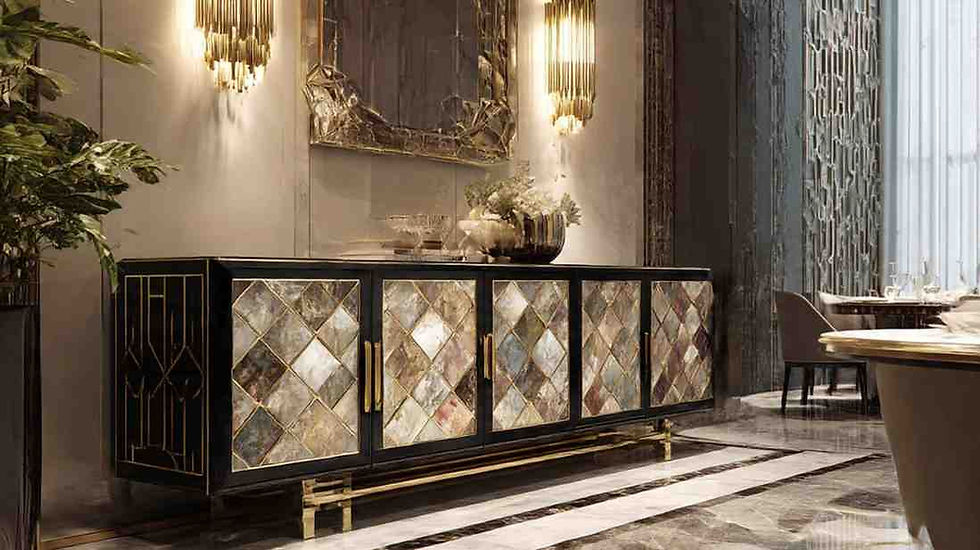
Bedside drawers in black offer a perfect mix of elegance and functionality. They help keep the bedside area organized while adding a bold and sophisticated look to the room.